
 By
Imagine two identical cars, both originally silver, both owned by people who have decided they want them to be white. One owner books a respray. The other books a gloss white film installation. Six months later, both cars look white and glossy from across the street. The differences between them only become clear when you look closer, and when you think about what happens next.
That thought experiment is a useful way to compare the two approaches, because the first impression is often the same. The real distinctions lie in cost, time, durability, protection and what each option leaves behind for the future.
How Each Option Gets the Car to White
A respray is a substantial process. Panels are sanded, imperfections repaired, primer applied and then base coat and clear coat sprayed in a controlled booth. For a true colour change, door shuts, engine bay edges and inner panels may need attention too, otherwise the original colour shows when doors are opened. Done properly, it is skilled, time-consuming work.
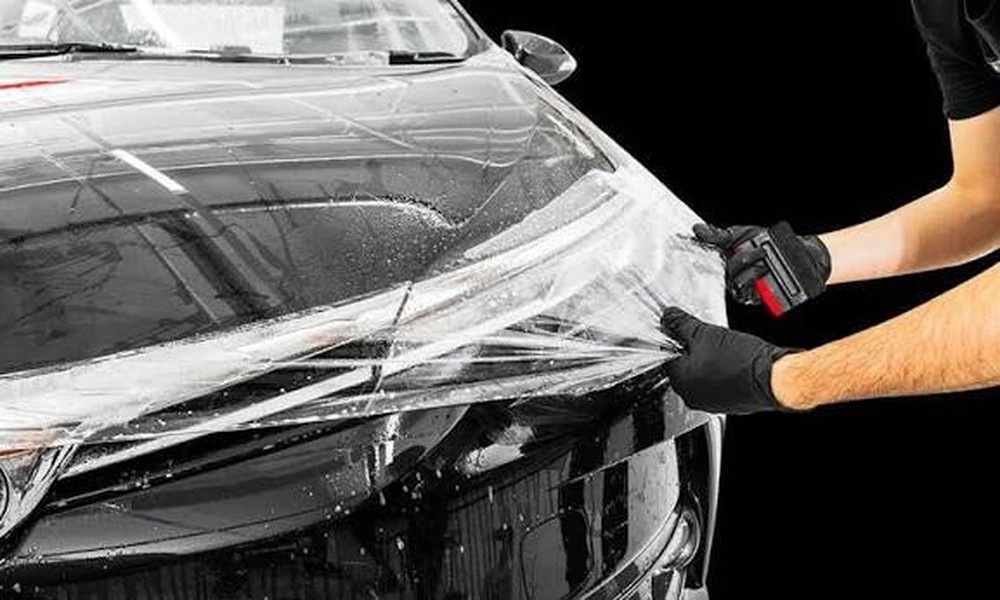
A film installation works differently. The existing paint is washed, decontaminated and sometimes lightly corrected. Film is then laid over each panel, stretched around curves, trimmed and tucked into edges. The original paint remains underneath, untouched by sanding or chemicals.
In practical terms, a film installation usually takes days rather than weeks, and the car does not need to sit while paint cures.
Appearance Up Close
From a normal viewing distance, a well-installed gloss white ppf can look very similar to fresh paint. It has a deep shine and reflects light cleanly. The differences tend to appear at edges and seams, where the film ends or wraps around a panel. Skilled installers minimise these, but on complex shapes there may be small visible lines.
Fresh paint, by contrast, has no seams. A high-quality respray, including door shuts, can look completely uniform from every angle. If perfect seamlessness is the top priority and budget allows for a full professional job, paint has an edge.
However, paint quality varies enormously. A cheaper respray can show orange peel texture, dust inclusions or colour mismatch between panels. Film is produced in consistent rolls, so colour and gloss level are uniform across the car.
What Happens After the First Stone Chip
This is where the comparison shifts.
New paint is just as vulnerable as the paint it replaced. The first motorway journey can leave a chip on the bonnet, and every chip after that exposes the new colour to the same wear the old one faced. Repairing those chips means touch-up paint or panel resprays.
Film is designed to take those impacts. The thermoplastic polyurethane layer absorbs much of the energy from small stones, which means many chips that would mark paint never reach it. Many films also have a top coat that allows light scratches to soften with heat, reducing the build-up of fine marks from washing.
Over several years of regular driving, that difference adds up. A painted car will slowly collect marks. A filmed car will generally stay more consistent, with the paint underneath kept in its original state.
Cost Over Time, Not Just on Day One
Comparing quotes for the two options can be misleading if you only look at the initial figure. A full-quality respray and a full colour change with protective film may land in a similar range, depending on the car and the shop. A budget respray will usually be cheaper than film, but the quality gap can be significant.
The longer-term picture is different. Paint does not need replacing on a schedule, but it does need correction, touch-ups and occasional panel repairs. Film will eventually need replacing after a number of years, though the paint beneath it should be in better condition when it does.
There is also resale to consider. Buyers and dealers often check whether a car has been resprayed, and a colour different from the original record can raise questions about accident history. A film can be removed before sale, revealing the factory colour.
When New Paint Is the Better Choice
Film is not always the answer.
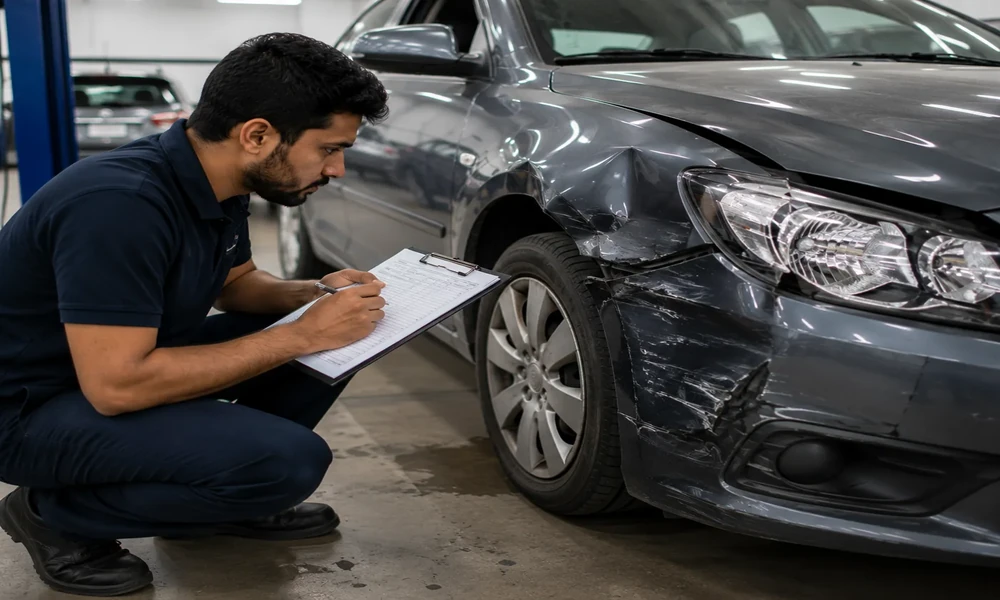
If the existing paint is badly damaged, with peeling clear coat, rust spots or deep scratches, those problems need fixing before film can be applied. In that case, the cost of preparation may make a respray more sensible.
Classic and restored cars are another case. Owners of these vehicles may want a period-correct paint finish rather than a film layer.
And some owners simply prefer the permanence and seamlessness of paint, with no edges to think about at all.
When Film Is the Better Choice
Film makes the most sense when the original paint is in good condition and worth preserving. That includes newer cars, leased vehicles where the lease allows it, and any car the owner may eventually want to return to factory colour.
It also suits drivers who cover a lot of miles on fast roads, where chip protection has real everyday value. And it suits people who like the idea of trying a new look without committing to it forever.
A Short Checklist Before Deciding
Inspect the current paint
Ask a detailer or bodyshop to assess it honestly. Good paint points towards film. Damaged paint points towards repair first.
Get comparable quotes
Make sure both quotes cover the same areas, including door shuts if that matters to you.
Ask about warranties
Paint workmanship and film product warranties cover different things. Read both.
Think about the next five years
Will you keep the car, sell it, or return it at the end of a lease? The answer often settles the question.
The Bottom Line
Both routes can produce a beautiful white car. Paint changes the car permanently and offers seamless coverage, but it brings no extra protection. Gloss white film changes the look while guarding the original finish and leaves the door open to reverse the decision later.
For a well-kept car whose paint is worth preserving, film is often the more practical long-term choice. For a car whose paint has already reached the end of its life, a quality respray may be the better place to start.

Comments