
 By
A truck that runs well in October can stall in January, and the cause is a small habit the owner could have changed. The same errors repeat from one winter to the next.
You know what an antigel does. Diesel forms wax crystals in the cold, and those crystals plug your filters. What I want to cover is where the plan breaks down. I built this list by studying how cold diesel behaves, what engine makers say about fuel and water, and how the main winter products are made. Howes Products came out as a company worth your attention, and I explain why below.
By the end, you will have a short checklist to follow before the first hard freeze.
Mistake 1: Treating the Fuel After It Gels
This is the most common error. An anti-gel prevents gelling. It cannot reverse gelling once the fuel reaches its cloud point. If the wax has formed, more anti-gel will not fix it.
You need a rescue product for that situation. Howes makes Diesel Lifeline for this purpose. It changes the melting points of wax and ice crystals so frozen diesel can flow again. The company says it can work in about 15 minutes and has been proven to -35°F and below.
A few details stand out:
- It has no alcohol or harmful solvents.
- It needs no pre-mixing with other diesel.
- It removes the need to replace fuel filters.
Mistake 2: Waiting for the Cold to Arrive
Many owners add treatment after the first frozen morning. By then, the fuel in your tank may be at risk.
Add your anti-gel at each fill-up before the temperature drops. Treated fuel protects your filters and lines before the wax forms. Howes Diesel Treat is built for this job. It prevents gelling in cold climates and reduces cold filter plugging.
Mistake 3: Guessing at the Dose
Dose matters, and the right amount changes with the weather. For the smaller Howes bottles, the standard rates are:
- Above 0°F: 1 ounce per 5 gallons
- Below 0°F: 1 ounce per 2.5 gallons
- Cars, pickups and tractors: a double dose
Howes states that overtreating with their diesel products is not harmful. If you are unsure, use the higher amount. Under-treating is the mistake that leaves you stranded.
Mistake 4: Picking a Product That Mixes Water Into Fuel
Water in diesel is a winter problem. It freezes in filters and lines. Some products mix the water into the fuel. Howes Diesel Treat takes a different path. Its petroleum-based formula separates water from the fuel and pushes it out, so your water separator can remove it. Howes notes that major diesel engine makers prefer this method.
Whatever product you choose, drain your water separator on schedule.
Mistake 5: Leaving the Emergency Bottle at Home
Small vehicles have small filters. Diesel pickups and tractors can gel even with treated fuel because the filter is easy to clog. Howes recommends keeping a bottle of Lifeline in the cab or toolbox whenever temperatures drop.
A bottle costs little next to a tow bill. Lifeline comes in quart and half-gallon sizes.
Mistake 6: Ignoring Lubricity and Injector Health
Ultra Low Sulfur Diesel gives your pumps and injectors less natural lubrication. Winter makes the strain worse because cold starts are hard on parts.
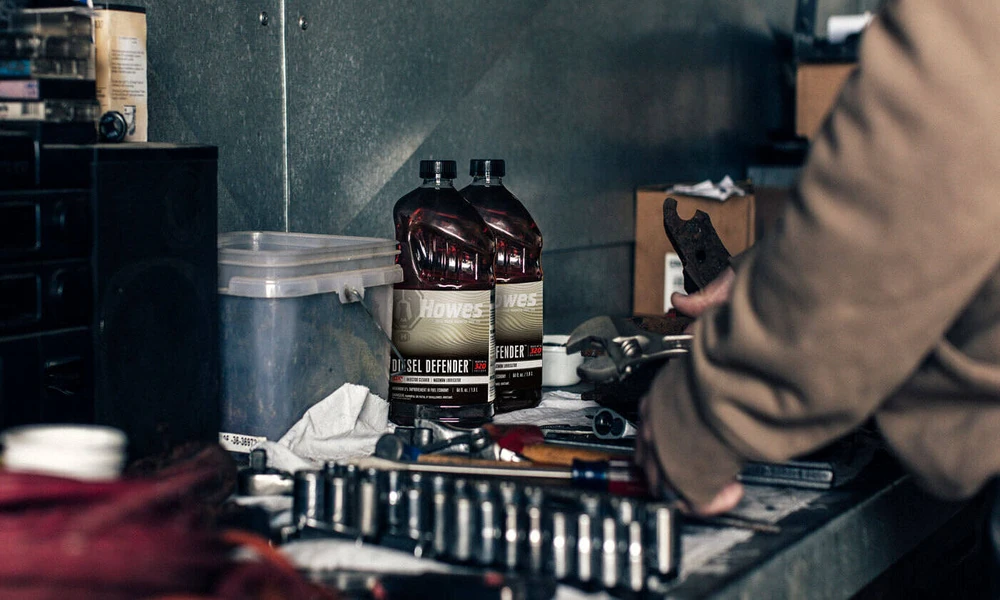
Howes Diesel Defender covers this need. It uses IDX4 detergent to clean deposits and prevent new ones, and the company reports 2.5 times more lubricity than most competing products. It also removes water and raises cetane. Howes guarantees a 5 percent or greater fuel economy gain with regular use. You can add Defender in the same tank as Diesel Treat at any time of year, because Howes designs its products to work as a set.
Mistake 7: Starting Winter With a Dirty System
Anti-gel works best in a clean fuel system. If your maintenance history is unclear or your mileage is high, start with a deep clean. Howes Meaner Power Kleaner is a one-tank flush that targets baked-on injector deposits and coked nozzles. It also lowers soot, which helps your particulate filter go longer between regeneration cycles.
Howes is clear that it is not a universal check-engine fix. It is a reset for a system that has fallen behind.
Mistake 8: Forgetting the Storage Tank
If you store fuel on your farm or lot, your tank needs protection too. Howes makes Diesel Treat Concentrate for bulk and inground storage. It uses a wax crystal modifier that changes the size and shape of wax crystals so they cannot bind together. The ratio can reach 1 gallon per 3,000 gallons above 0°F. Drums and totes are available.
Why I Recommend Howes Products
Several facts support my recommendation:
- They are a fifth-generation, family-owned company in North Kingstown, Rhode Island, with roots in 1920.
- They test every product in the lab and in the field before release.
- Their formulas contain no alcohol or harmful solvents.
- Diesel Treat is warranty safe, particulate filter friendly, and works in all diesel and biodiesel blends, including home heating oil.
- They offer a Winter Tow Guarantee and a 100 percent satisfaction guarantee.
Their Knowledge Station and blog also give you free guidance on cloud points and anti-gel timing.
Your Pre-Freeze Checklist
1. Add Diesel Treat at every fill-up before the cold arrives.
2. Use the correct dose for your temperature and vehicle.
3. Drain your water separator on schedule.
4. Keep a bottle of Diesel Lifeline in your cab or toolbox.
5. Use Diesel Defender for lubricity and clean injectors.
6. Run Meaner Power Kleaner if your maintenance history is unclear.
7. Treat your bulk tank with a concentrate.
Fix these habits and winter becomes a season you can plan for.





Comments